Service model
Delivered as a service
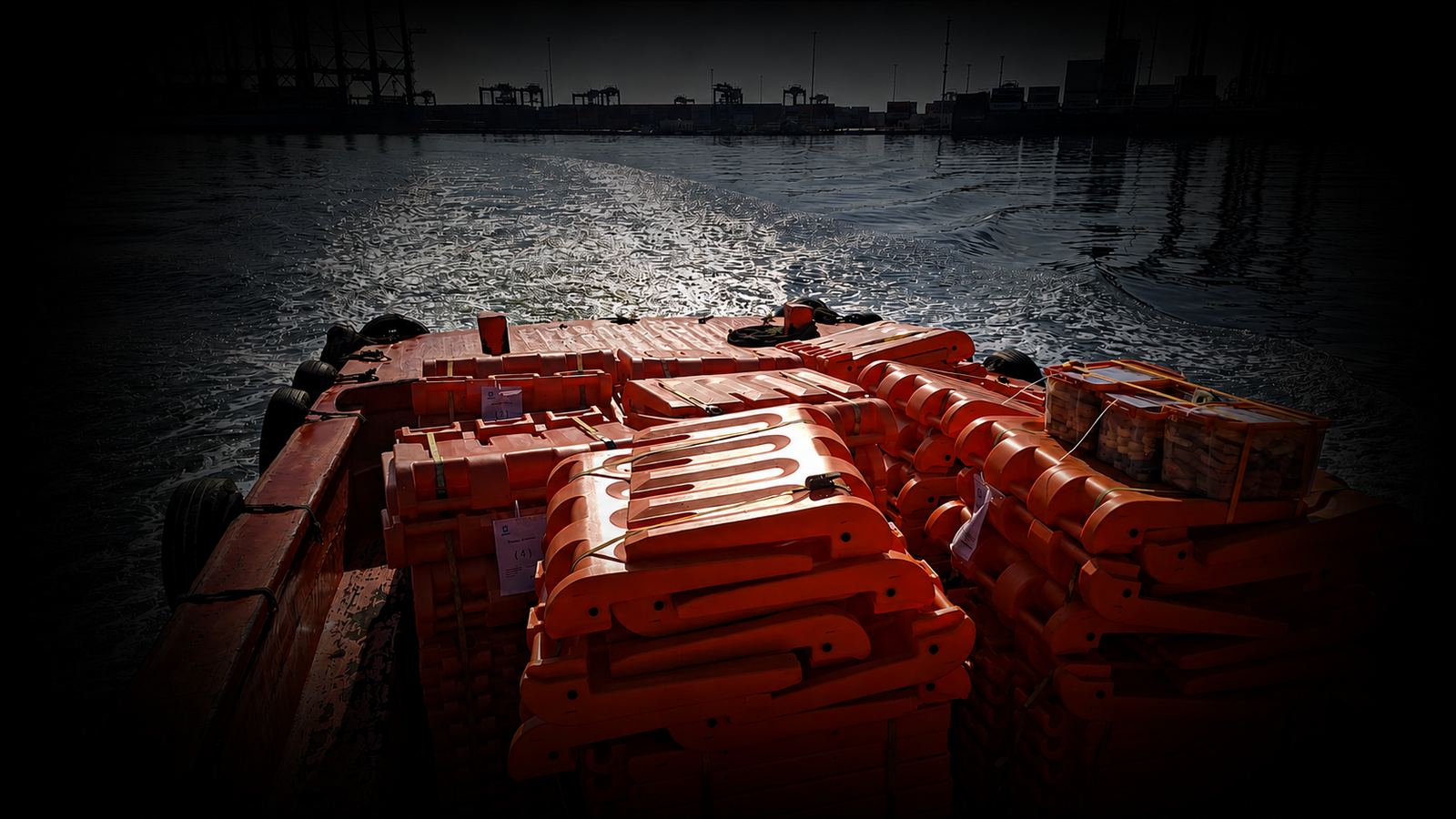
Deploy protection when required, without ownership or long-term commitments. Most operators keep the barriers on board, rigged or stowed flat, ready for the next transit.
The commercial difference
| Traditional approach | Palaemon approach | |
|---|---|---|
| Capital | Upfront purchase and capital expenditure | Rented: deploy only when and where protection is needed |
| On board | Bulky, hazardous kit to stow, inspect and maintain | Stows flat on board: 12 sets to a pallet |
| Inventory | Inventory management burden | No inventory to manage; broken pieces replaced under the rental |
| Commitment | Long-term commitment | No long-term commitment |
| Scale | Difficult and costly to scale | Easily scaled across vessels and regions |
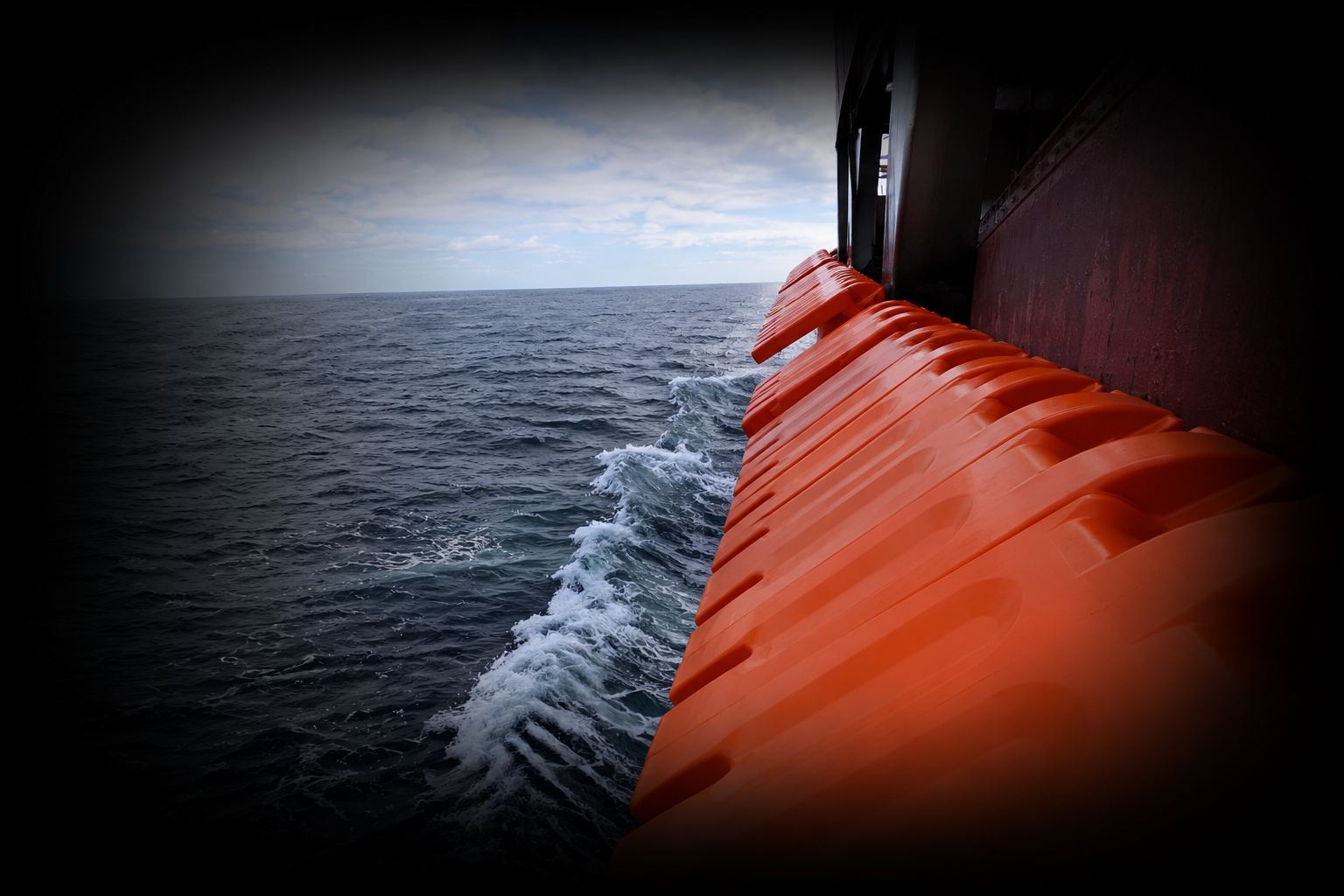
| Crew | Crew safety concerns with deployment | Engineered: safer for crew, proven performance |
How the service works
1
Delivered
Stocked in multiple global locations and supplied at port or offshore.
2
Installed
Fitted by the onboard crew using standard ship equipment.
3
Ready for the next transit
Most operators keep it on board, rigged or stowed flat. Prefer it ashore? We can store it, though repeated port deliveries usually add more cost and admin than they save.
4
Recovered
Recovered at port or offshore when your programme ends.
Shipping changes, so does deployment
Built for real operations
Commercial schedules change quickly. The service adapts: equipment can be recovered, redeployed or off-hired as vessel schedules evolve.
- Spot market: deploy for single or multiple transits.
- Time charter: flexible deployment across charters.
- Rotating schedules: flexibility as vessels rotate.
- Changing routes: delivery and returns adapted to the route.
- Off-hire: when a vessel leaves high-risk trade, the equipment can be off-hired and recovered.
For most operators, keeping the barriers on board between transits is the simplest option.