
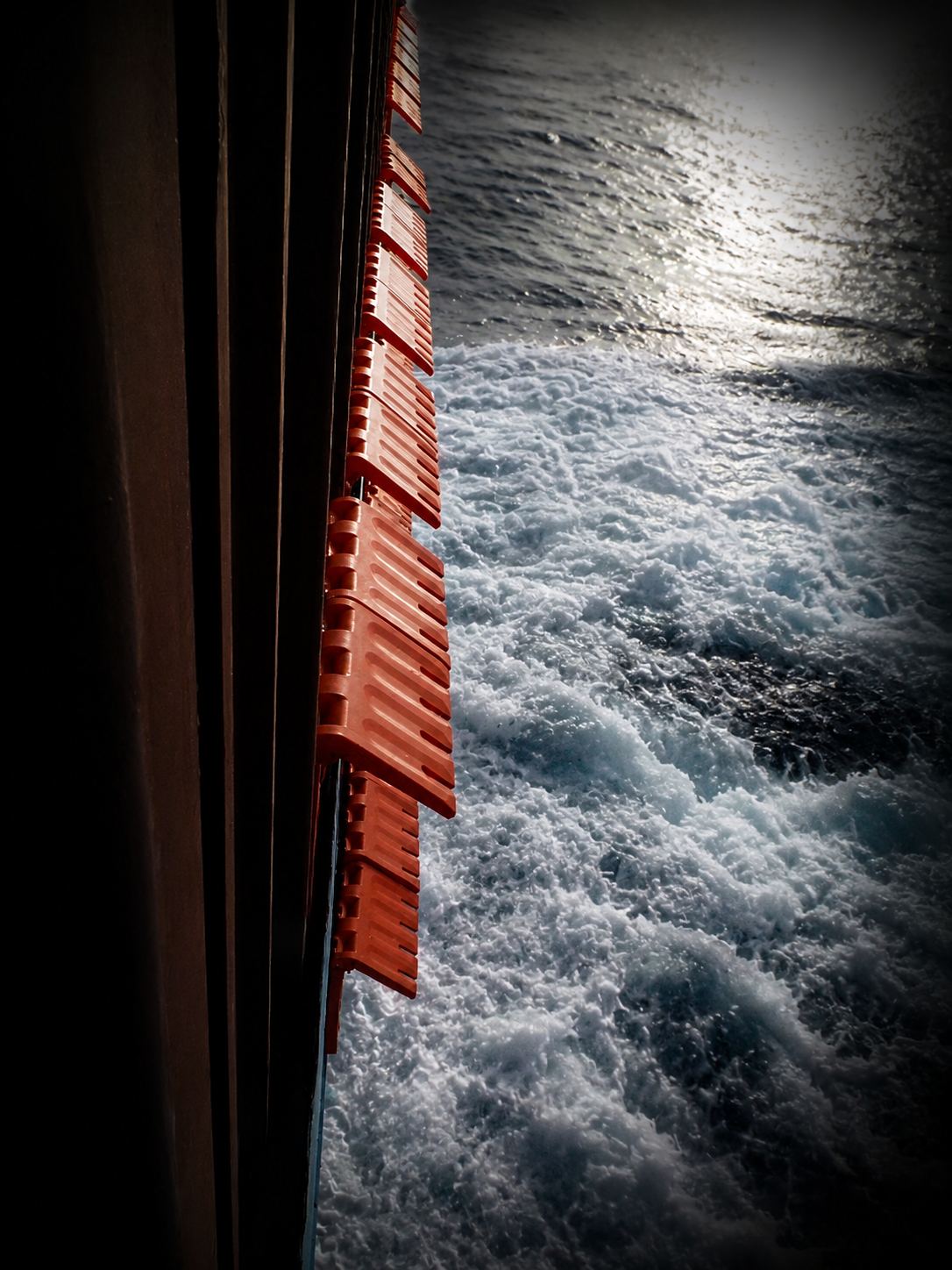
Much safer for crew. About the same cost.
Razor wire has been the default for decades because it is familiar, not because it was designed to stop boarding. Here is the case, laid out the way a CSO or superintendent needs to forward it.
At a glance
| Razor wire | Palaemon barriers | |
|---|---|---|
| Designed to stop boarding? | No. It delays, and can be cut or bypassed. | Yes. The overhanging top panel gives a ladder or hook nothing to hold. |
| Crew safety | BMP MS tells crews to use PPE and wire hooks to move and install it. | No sharp edges, no rust, no specialist tools. |
| Rigging time | Typically a full day for a crew of 4–6. | About one minute per metre of rail. |
| Consistency | Rigged differently on every voyage and vessel. | The same engineered fit on every ship. |
| Between transits | Hazardous coils to stow, or scrap and resupply. | Stays rigged or stows flat: 12 sets per pallet. |
| Disposal | Difficult and costly to remove and dispose of responsibly. | Reused. Recovered for inspection and redeployment. |
| Annual cost per vessel | Bought per metre, per supply. | About the same. Your plan shows both side by side. |
Compare the year, not the coil
Razor wire looks inexpensive by the coil. The true cost sits around it: delivery to the ship, agency fees at anchorage or OPL, clips and PPE, wastage, resupply when it corrodes or is cut away, and disposal.
We compare like with like, for your ship, over a year:
- Razor wire: metres of rail × delivered cost per metre × supplies per year (BMP MS recommends a double roll, which doubles the material).
- Palaemon: barrier sets for the coverage you choose × the rental, delivered once and collected once.
- Hybrid: many operators fit barriers where the risk is highest (usually aft, where freeboard is lowest) and keep wire elsewhere. The plan shows that too.
On that basis the annual cost comes out at about the same as razor wire, with a system that is far safer for the crew to handle.
Get your ship's comparison
Enter your vessel in the calculator and choose “Email me the full plan”. You'll receive pricing for your vessel and the razor wire comparison, side by side.
We don't publish prices: every ship's coverage is different.
Open the calculatorAbout a minute per metre
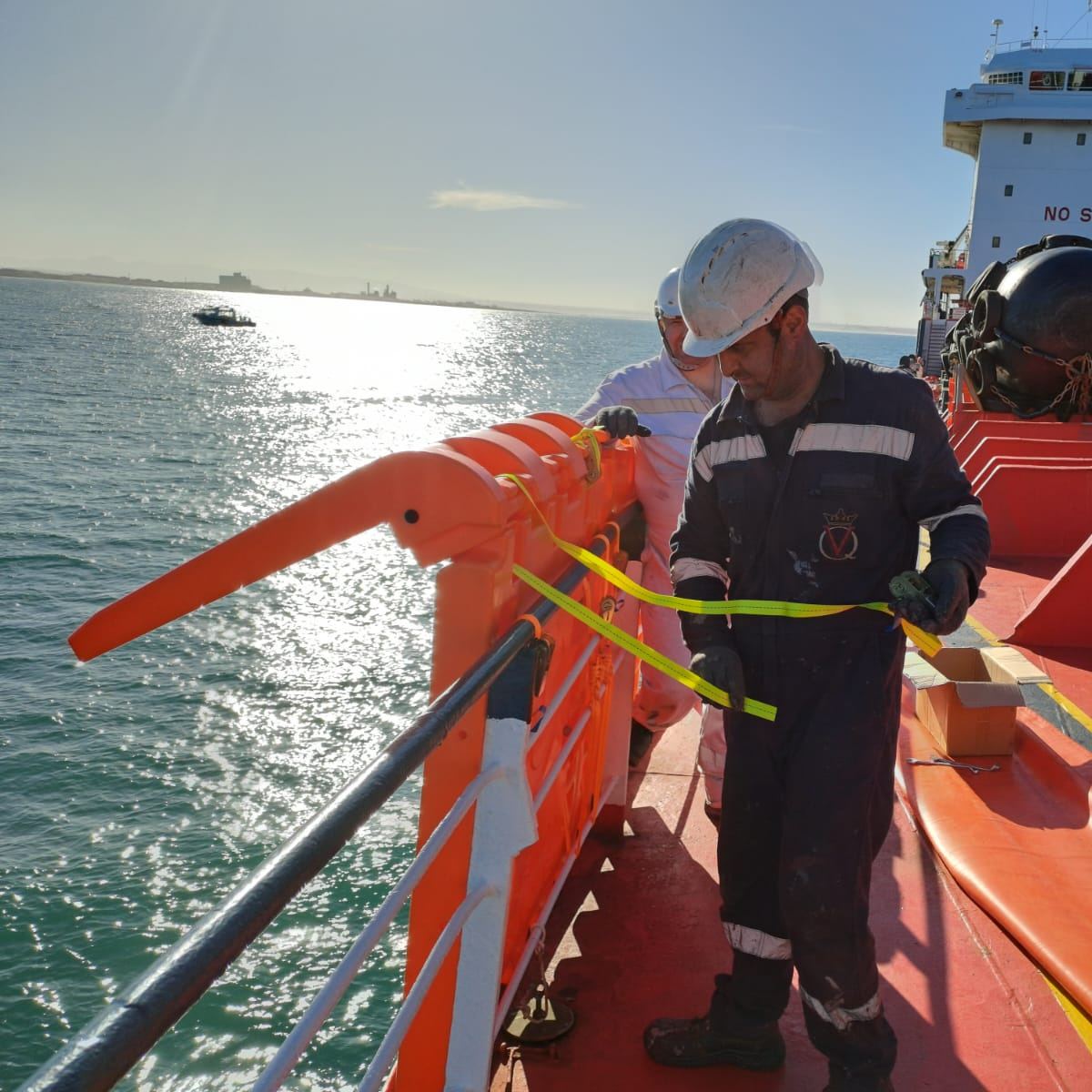
Each set takes the crew approximately one minute per metre of rail, with standard ship equipment and our guidance. Two teams working port and starboard halve the elapsed time.
On the LNG case study, crews reported that after the first installation the process became “smooth, streamlined, and time-effective”.
The calculator gives an estimate of crew time for your coverage.
Deployed by crew, for crew
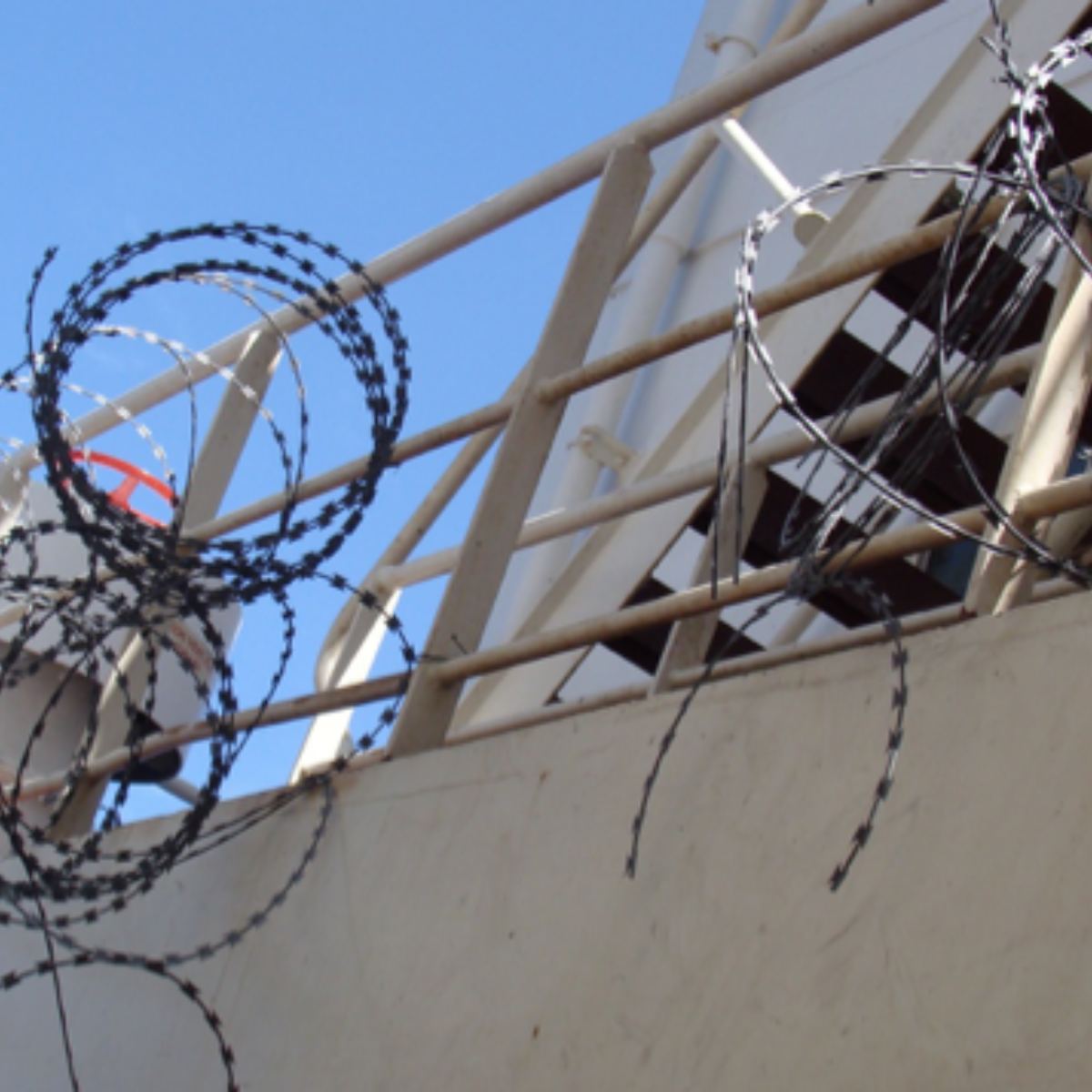
Razor wire is hazardous at every stage: unloading, moving, rigging, re-rigging after port calls, and taking it down. Every handling is an exposure to cuts.
Palaemon panels have no sharp edges and no rust. They are lightweight, carried by hand and fixed with ratchet straps.
What the guidance says
BMP MS, on razor wire
Recommends high-tensile concertina wire in 730 mm or 980 mm coils, ideally a double roll, secured to stop attackers pulling it off, and advises crews to “use personal protective equipment and wire hooks to move and install razor wire”.
BMP Maritime Security (2025)
Lists physical barriers as part of preventing access, and again tells crews to secure razor wire properly, use PPE and obtain it in short sections for easier handling.
Palaemon barriers support vessel hardening consistent with BMP MS guidance and your ship security plan: a physical barrier on the most vulnerable access points, fitted the same way on every transit.
Sources: BMP MS, Section 5, Ship Protection Measures; BMP Maritime Security, First edition, March 2025, Section 05.
Built to take a load
The spec sheet
Specifications, test results, stowage and the rigging sequence on one page, ready to forward to your technical team.
Download the spec sheet